Why Super 8 Still Matters
We live in a time where almost everything is recorded.
Phones are always within reach. Clips are captured constantly, edited quickly, and shared just as fast. Images are consumed in seconds and replaced almost immediately by the next thing.
Against that backdrop, it’s fair to wonder why something as slow, analogue, and imperfect as Super 8 wedding film still has a place.
But that’s exactly why it does.
Slowing down changes how moments are seen
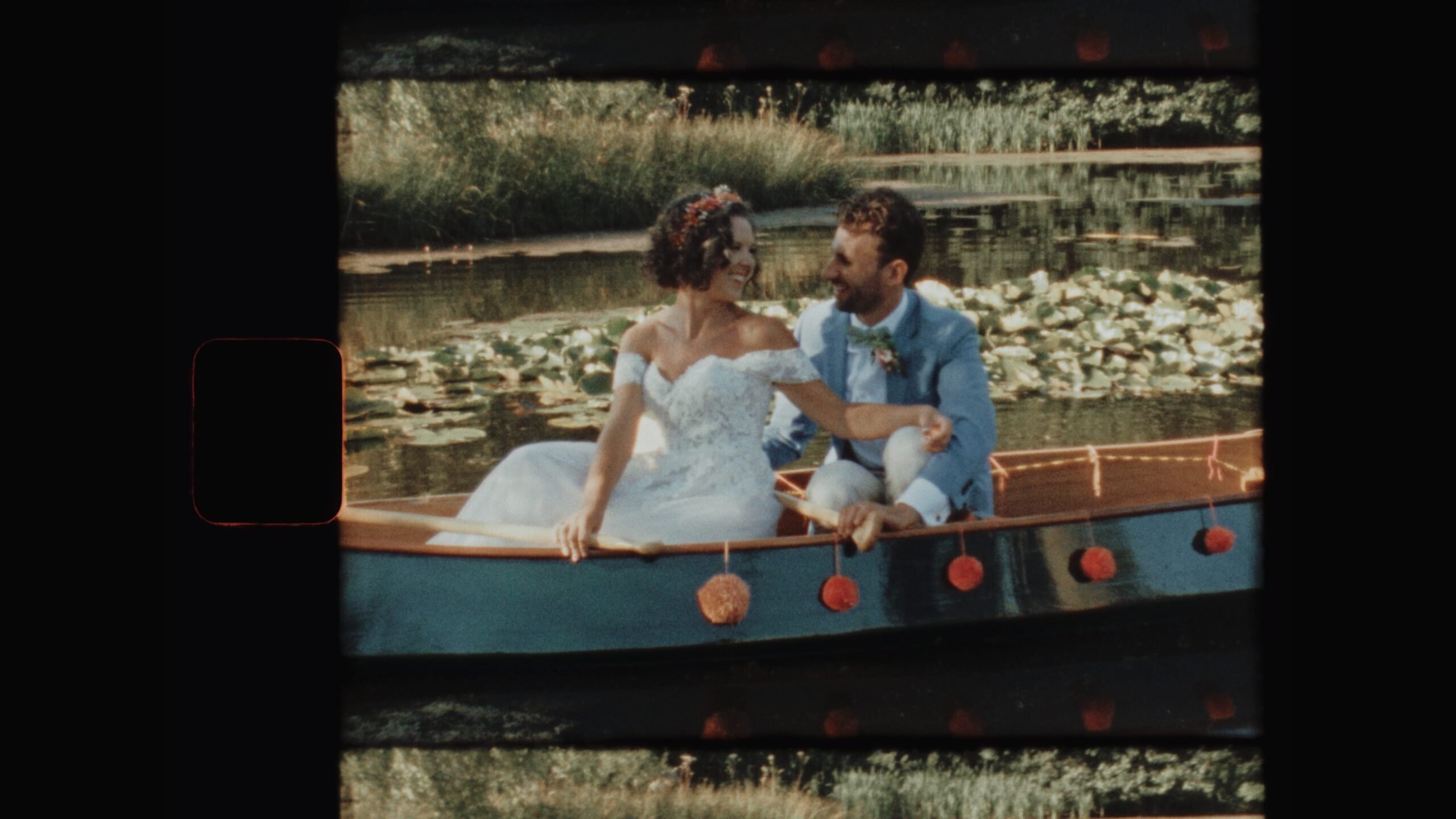
Super 8 is real film. It’s physical. Finite. Limited.
You can’t roll endlessly. You can’t fix things later. Every few seconds of footage is a choice. That limitation changes the way moments are approached.
Instead of capturing everything, the focus shifts to noticing. Movement. Light. Atmosphere. The feeling in a space, rather than the spectacle of it.
In a world shaped by speed and volume, that slowness becomes meaningful.
A response to fast, disposable imagery
Modern wedding films often exist in the same ecosystem as social media. Fast pacing. Immediate impact. Designed to be impressive quickly.
There’s nothing inherently wrong with that. But it does tend to prioritise immediacy over longevity.
Super 8 does the opposite.
Its grain, softness, and unpredictability resist perfection. It doesn’t try to keep up with trends or technology. It doesn’t shout for attention. It asks you to sit with it for a moment.
That’s what gives it weight.
How Super 8 shows up in a wedding film
In practice, Super 8 wedding film isn’t about coverage. It’s about texture.
It works best in the quieter parts of the day. A walk between places. Guests talking without awareness of the camera. Light shifting across a room. The in-between moments that are easy to overlook.
Because Super 8 is analogue, it naturally lends itself to feeling rather than precision. It captures motion in a way that feels more like memory than documentation.
That’s why it’s often woven gently into a wedding film, or in some cases used as the primary way of telling the story. Not to dominate the film, but to change its emotional register.
Why it feels different to digital
Digital footage is clean, reliable, and precise. It does its job exceptionally well.
Super 8 isn’t trying to compete with that.
The difference isn’t quality. It’s character.
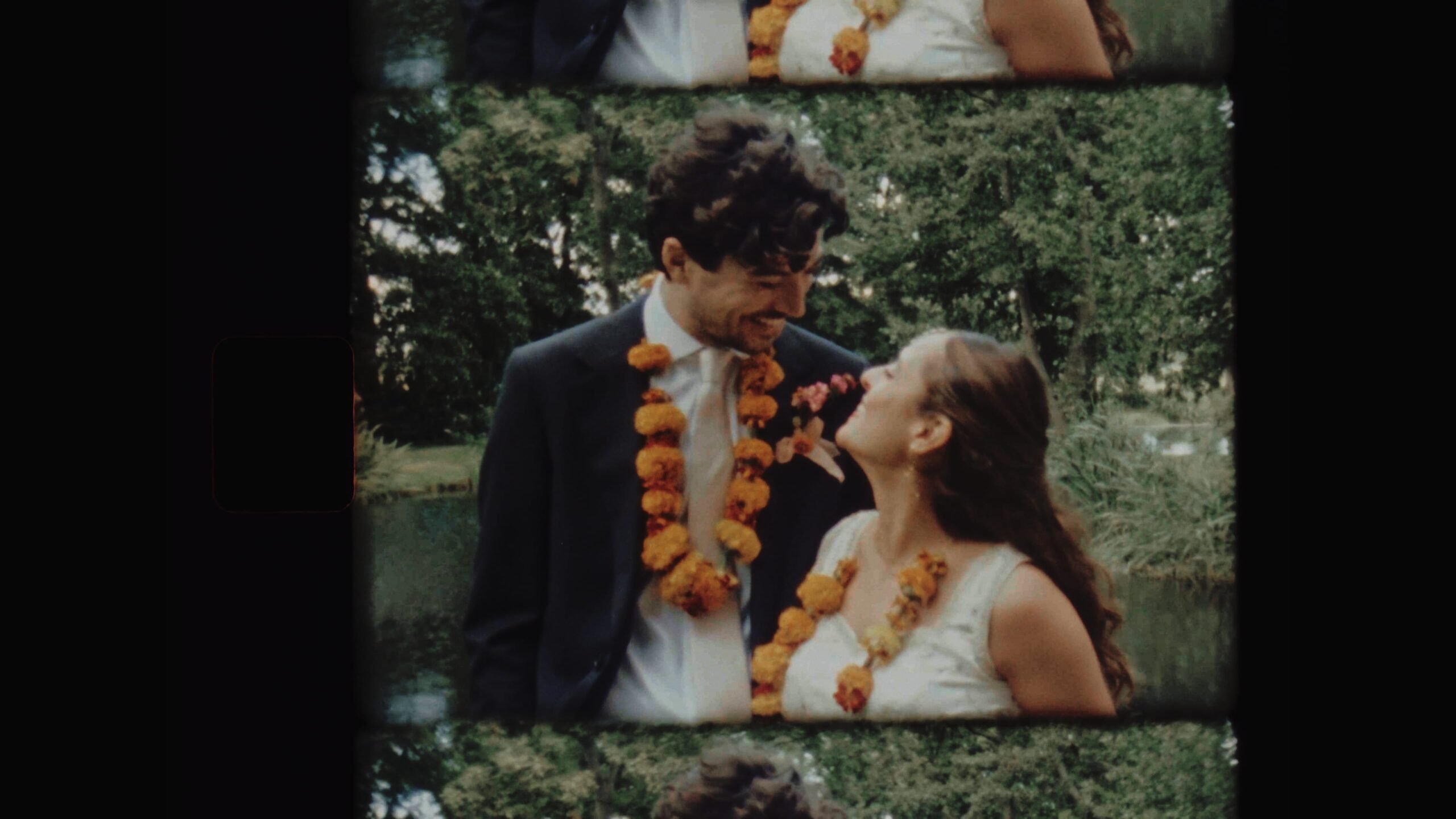
Analogue wedding videography carries imperfections by default. Grain. Soft focus. Colour shifts. These aren’t flaws to be corrected. They’re part of what makes the footage feel human.
It’s the difference between seeing something exactly as it was, and remembering how it felt.
It isn’t for everyone, and that matters
Not every couple connects with the idea of real film. Some want clarity, speed, and completeness above all else.
Super 8 asks something different.
It asks for patience. For trust. For an openness to imperfection.
But for couples who value atmosphere over precision, and memory over immediacy, it often becomes one of the most meaningful parts of their wedding film.
Why it still matters now
Super 8 matters because it offers an alternative.
In a digital world built on speed, it brings slowness.
In a visual culture driven by polish, it brings texture.
In an age of endless footage, it brings intention.
That’s why vintage wedding film style continues to resonate, not as nostalgia for the past, but as a way of remembering more honestly in the present.
Super 8 still matters because it asks us to look, rather than scroll.