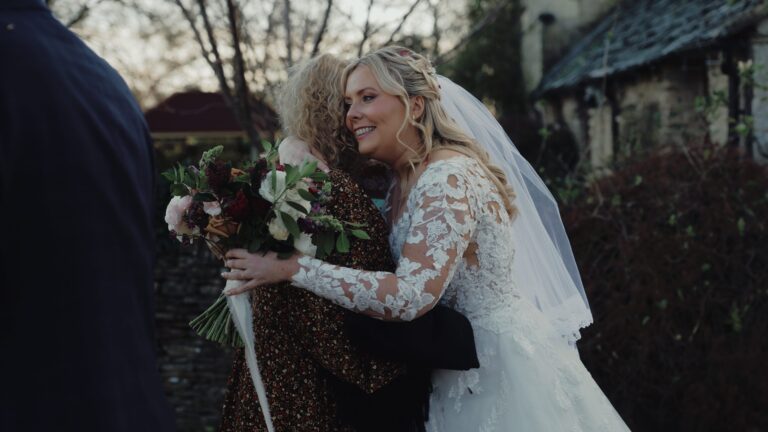
What Super 8 Wedding Film Actually Looks Like
A lot of couples are drawn to the idea of Super 8 before they fully know what it looks like.
Some have seen something in a wedding film that felt different. Warmer. Older somehow. Like a memory rather than a recording. Others have simply heard it mentioned, seen it listed on websites, noticed it appearing more often. It sounds appealing without being entirely clear what it actually means.
If you want to understand why Super 8 still has a place in modern wedding filmmaking, this blog covers that. What follows is simply about what it looks like.
The grain
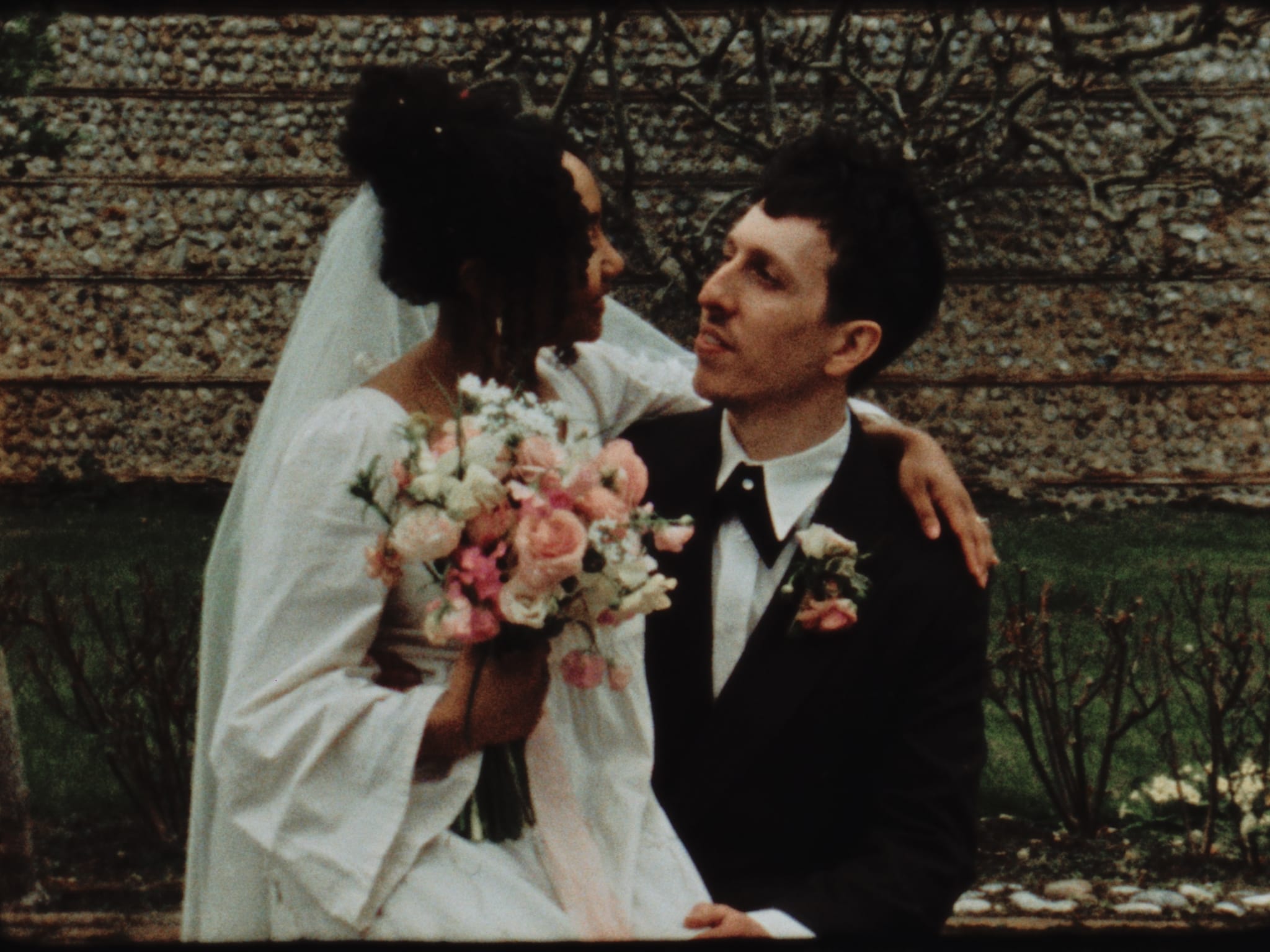
The most immediately noticeable thing about Super 8 footage is the grain.
It isn’t a filter or an effect added afterwards. It’s a physical property of real film, the result of light hitting silver crystals on a strip of celluloid. It’s organic and slightly unpredictable. No two frames are identical.
That grain softens everything it touches. Hard edges become gentler. Bright light blooms a little. Shadows hold more texture than darkness.
It makes footage feel like it was made by hand.
The colour
Super 8 doesn’t render colour the way a digital camera does.
Digital footage tends toward accuracy. It captures things as they are. Super 8 captures things as they feel. Warmer in the highlights. Slightly faded in the midtones. Colours that sit closer together rather than pulling apart for contrast.
The result is a palette that feels familiar in a way that’s difficult to explain. It looks like old photographs. Like something you might find in a shoebox. One couple described it as having a scrapbook quality, and that’s stuck with me ever since, because it’s exactly right. Present, but already becoming a memory.
The motion
This is where Super 8 does something quite specific.
The standard frame rate of Super 8 is 18 frames per second, compared to the 25 that digital cameras typically use. That lower frame rate gives movement a slightly different quality. Not slow motion exactly, but something gentler. Less fluid than digital, more like the way memory works, where things don’t move in perfect continuity but in impressions.
A walk across a field. Guests laughing. Confetti falling. All of it carries a softness that digital footage simply doesn’t replicate.
What it does to a moment
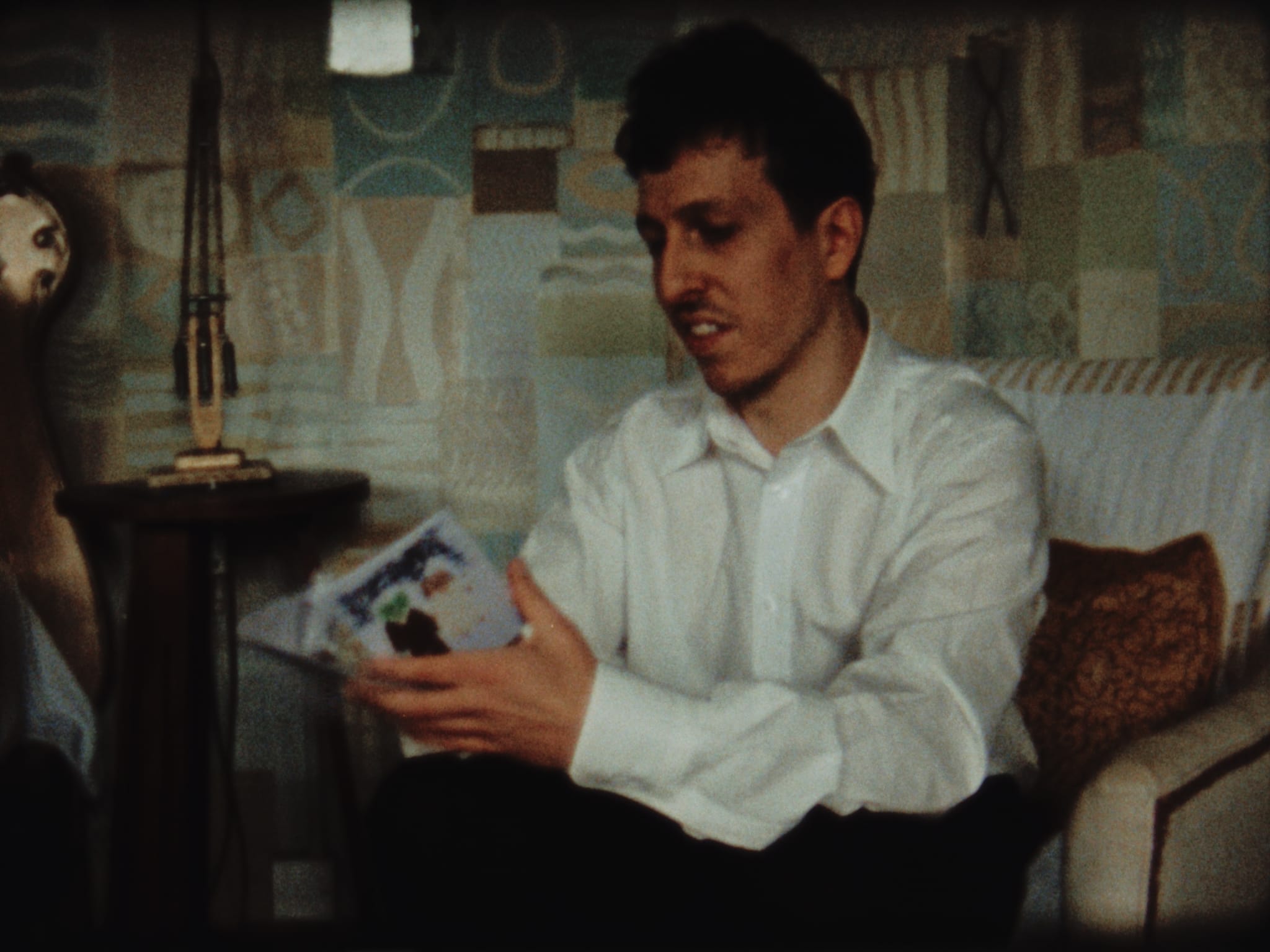
Taken together, these qualities change how footage feels to watch.
There’s a stillness to Super 8 even when things are moving. A quietness. It asks you to look more slowly, because the image itself is slower. Less precise. More felt than observed.
That’s not a limitation. It’s the point.
Where it works best
Super 8 suits certain parts of a wedding day more naturally than others.
It thrives in available light. Golden afternoon light filtering through trees. The warm glow of a reception room in the early evening. Bright open sky on a coastal ceremony. These conditions give the film something to work with, and it responds beautifully.
In darker interiors or evening settings, it needs help. Unlike a digital camera, Super 8 can’t push into low light and recover detail. Without sufficient light, the film simply won’t expose. You’d be left with nothing. So in those situations I bring additional lighting to give the film what it needs. It’s a practical reality of working with a genuinely analogue format, and something I plan for on every wedding where Super 8 is involved.
What it isn’t
Super 8 isn’t sharp. It isn’t clean. It won’t capture every detail with precision.
If you want clarity above all else, it probably isn’t for you. But if you want footage that feels like something, that carries atmosphere and a sense of time, it offers something that no digital format can quite match.
Not better. Just different. And for the right couples, exactly right. If you’d like to find out more about adding Super 8 to your wedding film, you can read about it here.