A Calm Way to Think About Your Wedding Day Timeline
Hints & Tips
Planning Your Wedding Day Timeline
Weddings move quickly. Even the calm ones.
No matter how much planning goes into the day, it has a way of slipping past in moments. That’s not a bad thing. But it does mean that how you think about time matters more than most people realise.
This isn’t a guide about exact timings or the “right” way to structure your day. It’s a calmer way to think about your wedding timeline, one that leaves space for presence, connection, and the moments you’ll actually remember.
The morning
The tone of your wedding day is often set long before the ceremony begins.
A slower morning gives you time to settle into the day rather than being pulled straight into it. It allows conversations to happen naturally. It gives room for quiet moments, laughter, and that feeling of anticipation building gently rather than all at once.
This doesn’t mean everything needs to be perfectly calm. It simply means allowing enough breathing room so the day doesn’t start with urgency.
When the morning feels unhurried, everything that follows tends to feel the same way.
The ceremony
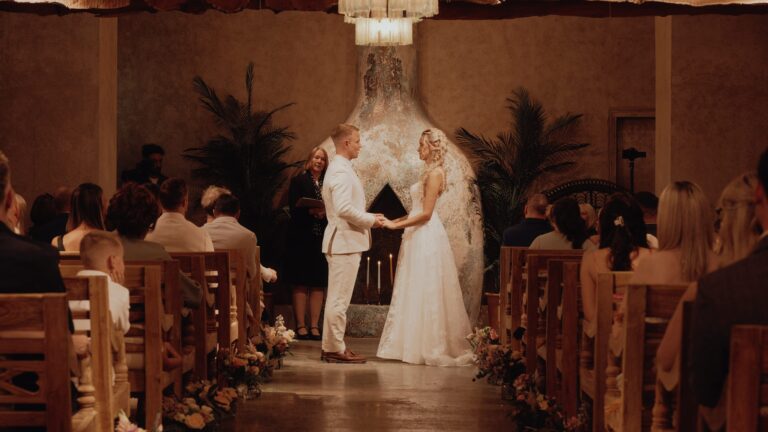
Most couples spend a lot of time thinking about how long the ceremony will be. In reality, what matters far more is how you arrive at it.
Giving yourself time beforehand to pause, gather, and be present changes how the ceremony feels entirely. When you’re not rushing from one thing to the next, you arrive more grounded, more aware, and more open to what’s happening around you.
Those few quiet moments beforehand often become some of the most emotionally significant parts of the day.
The space in between
Once the ceremony ends, there’s often a sense of release. This part of the day doesn’t need to be tightly structured to work well.
Unplanned time allows people to drift, reconnect, and relax. It’s where hugs last longer, conversations deepen, and the atmosphere of the day really settles in.
From a storytelling point of view, these in-between moments are often just as meaningful as the headline events. They’re where the day starts to feel fully lived rather than scheduled.
Speeches
Speeches don’t need to be flawless to be memorable.
What matters most is how they’re paced and how they feel within the flow of the day. When speeches are given space rather than rushed, they tend to land more naturally. Laughter feels easier. Emotion has room to breathe.
It’s less about sticking to a strict order or duration, and more about reading the room and letting the energy guide the moment.
The Evening
By the time the evening arrives, the best thing you can often do is loosen the plan.
This is when people are fully present, relaxed, and ready to celebrate. Trying to control this part of the day too tightly can pull you out of the experience just as things are opening up.
Allowing the evening to unfold naturally often leads to the moments that feel the most joyful, the most connected, and the most alive.
A final thought about time
Your wedding day isn’t remembered in minutes or schedules. It’s remembered in feelings.
Giving yourself space doesn’t mean the day loses momentum. It means you get to stay inside it, rather than constantly moving on to the next thing. A timeline should support your experience, not compete with it.
If you’re planning your day and want it to feel calm, unforced, and genuinely yours, thinking about time this way is a good place to start.